Woofie's Adds Mobile Grooming Franchise in North Austin
Woofie's North Austin adds mobile grooming, dog walking and pet sitting. The local expansion highlights route planning, service coordination and customer trust.
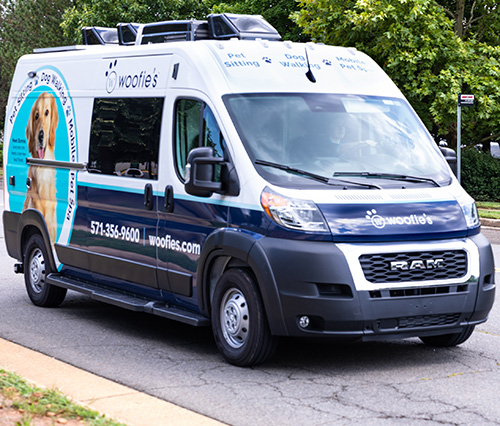
Image credit: Woofie's. Representative company vehicle. A branded Woofie's mobile grooming van appears in a company exterior photograph.
Woofie's has added a North Austin franchise offering mobile pet grooming, dog walking and pet sitting in Austin and Cedar Park. Owners Cody and Mia Erickson promoted the launch through a grand-opening celebration scheduled for October 17 at Barktoberfest in Cedar Park.
The location's published service area and current website establish its local offering; the October 17 date describes the announced celebration, rather than the first day the business necessarily accepted customers. North Austin launch information Local service page
For nearby grooming businesses, the expansion adds another type of competitor: an operator seeking to serve the same household across several pet-care needs. For mobile groomers, it highlights a more familiar challenge. The convenience sold to the customer has to be supported by a route that works for the business.
The local team behind the expansion
Cody Erickson brings a business marketing and development background, while Mia Erickson's experience is in healthcare and client relations, according to the location's own account. The franchise identifies Sunni Scalici as general manager, with more than two decades of pet-industry experience and a background in low-stress handling. Meet the North Austin business
A company-supplied announcement also describes Scalici as lead groomer and says the operation combines experienced walkers, sitters and groomers. It points to the Woofie's app for scheduling, walk tracking and customer updates. Woofie's launch release
Those details explain the intended operating model. They do not provide a basis to estimate local booking volume, revenue or the number of grooming vehicles in service. A franchise opening is a useful signal of supply, but it is not a measure of the demand available to every operator in the area.
Mobile convenience depends on route discipline
A grooming van provides a service location at the customer's address. It also has to travel between those addresses, find suitable access and remain ready for the next appointment. That makes time between bookings part of the operating cost.
The relevant question is not simply how many appointments fit into the calendar. It is how many can be completed reliably within the working day, including travel, preparation and the time required to leave the vehicle ready for the next dog.
An independent operator can assess that with their own appointment history. Record service time and travel time separately, then examine where a route repeatedly falls behind. A distant booking may look attractive when viewed on its own and less attractive when it changes the rest of the day.
This is an operational calculation, not an argument that a wider service area is always wrong. A business may choose to travel further for a suitable group of recurring clients. What matters is knowing the cost of that choice before making it a standing promise.
Several services create more points of contact

Representative pet photograph from the Woofie’s company website. Credit: Woofie’s.
Walking, sitting and grooming can give a business several reasons to hear from the same household. That creates an opportunity to maintain a relationship between grooming appointments, but it also requires careful coordination.
A client may have different instructions for a grooming visit and an overnight sitting arrangement. Access details, emergency contacts and changes to the pet's routine need to reach the relevant person. Selling the additional service is only the first step; delivering it consistently requires usable records and clear responsibility.
Businesses considering a broader menu should also distinguish demand from capability. Customers may want a service that the current team is not equipped to provide. Expanding gradually allows an owner to check staffing, training and scheduling before making the offer permanent.
For a salon that prefers to remain focused on grooming, a referral relationship with a trusted walker or sitter can address a similar customer need without adding a new department. The suitable approach depends on the business and the people available to run it.
What local competitors should compare

Representative pet-sitting photograph from the Woofie’s website. Credit: Woofie’s.
The useful comparison is the customer experience at each stage: the inquiry, the booking, the appointment and the follow-up. A mobile operator may appeal to households that place particular value on avoiding a trip to a salon. A salon can offer its own advantages through its location, team, equipment and appointment structure.
Owners should make those differences concrete. Clear service descriptions and realistic availability help customers choose based on what they need. An automatic price reduction in response to a franchise announcement can obscure those differences without solving a genuine service problem.
What This Means for Your Business
North Austin's new franchise is a reason to examine local service choices and the reliability of your own booking experience. Mobile operators should review travel alongside service revenue; salons should explain the benefits of their own model clearly. A customer's decision depends on the care and convenience actually delivered, not the format of the business alone.